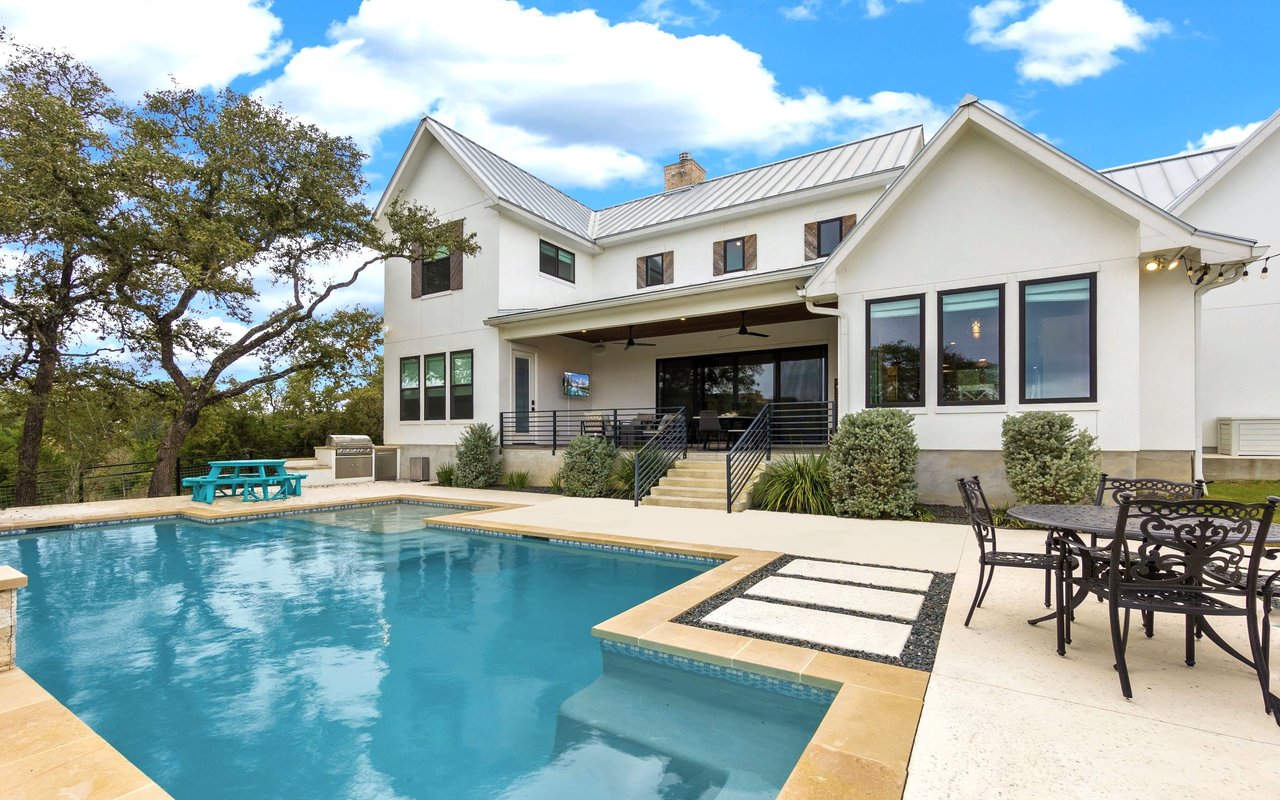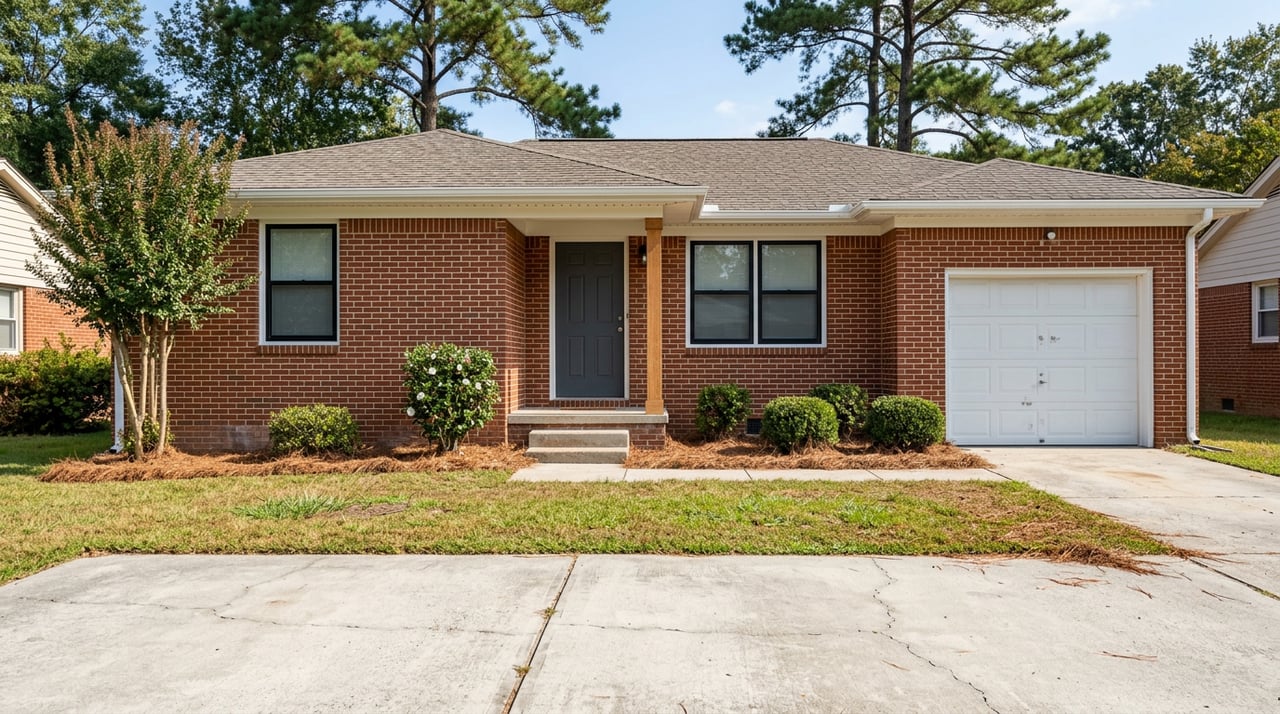
Buying your first home in Hope Mills can feel big and exciting. You want a smart plan, honest numbers, and a timeline that works with your life, whether you are settling roots or arriving on PCS orders to Fort Liberty. In this guide, you will get clear steps, local costs to expect, the North Carolina contract basics that surprise many first-time buyers, and money programs that can lower your cash to close. Let’s dive in.
Why Hope Mills works for first-time buyers
Hope Mills offers approachable prices compared to many metro areas. Recent snapshots show typical home values near $258,700, and recent median sales hover around the mid-$200s depending on the source and exact month. Always pair these ranges with a fresh lender preapproval and current MLS data for your target neighborhoods.
If you work at Fort Liberty, the drive from Hope Mills is often about 15 to 25 minutes depending on the gate and traffic. That balance of price and commute is a big reason many military households choose this area.
To get a feel for the community, local parks, and events, check the Town of Hope Mills site.
Money first: what to budget
Upfront cash at a glance
Here are the common cash items you should plan for before closing:
- Due diligence fee in NC: a negotiated fee paid to the seller at offer acceptance. Often credited at closing if you proceed.
- Earnest money deposit: held in escrow and typically refundable if you cancel within the due diligence period per the contract.
- Inspections: a general inspection often runs about $300 to $500, with add-ons like radon, septic, or termite bringing a typical total to about $500 to $1,500. See typical ranges in this inspection cost guide.
- Appraisal and lender fees: the appraisal often falls around $400 to $700, with exact costs shown in your Loan Estimate.
- Closing costs: commonly about 2 to 5 percent of the purchase price, plus any down payment your loan requires.
Example on a $260,000 purchase
Every deal is different, but sample figures can help you plan:
- Earnest money example at 1 percent: $2,600
- Due diligence fee example: often a few hundred to several thousand dollars, depending on terms and market
- Inspections: budget $500 to $1,500
- Closing costs at 2 to 5 percent: roughly $5,200 to $13,000
These numbers are only planning ranges. Your lender’s Loan Estimate and your negotiated offer will set your exact figures.
Lower your cash with NC programs
You may qualify for programs that reduce your out-of-pocket cost:
- NC Home Advantage Mortgage: down payment assistance up to 3 percent of the first mortgage amount as a 0 percent deferred second, subject to program rules.
- NC 1st Home Advantage: up to $15,000 for eligible first-time buyers or veterans.
- Community Partners Loan Pool (CPLP): up to 25 percent of the price, max $50,000, when paired with NCHFA products.
Review current rules, income limits, and participating lenders on the NCHFA help page.
- VA loan: for eligible service members, veterans, and some surviving spouses, this can offer no down payment and no PMI. Check your Certificate of Eligibility and details at the VA housing page.
- USDA loan: if the property address is USDA-eligible, you may qualify for 100 percent financing. Verify addresses with the USDA eligibility tool. Not all Hope Mills properties will qualify, so check early.
Get preapproved the right way
A strong preapproval sets your price range and makes your offer more competitive. Here is a quick checklist:
- Gather documents: recent pay stubs, W-2s, tax returns, bank statements, and any VA/BAH information if applicable.
- Ask about assistance: confirm your eligibility for NCHFA, VA, or USDA with a lender that participates in those programs.
- Compare estimates: request a written Loan Estimate and review closing costs, rate, and monthly payment. The CFPB’s guide to closing disclosures explains the timeline and what to check.
NC purchase contracts explained
Due diligence fee vs earnest money
North Carolina’s standard contract uses a due diligence period and a due diligence fee. The fee is paid to the seller at offer acceptance and is usually nonrefundable if you cancel after due diligence ends, but it is commonly credited to you at closing. Earnest money is separate, held in escrow, and typically refundable if you cancel during the due diligence period per the contract. For clarity, see the NCREC’s guidance on common questions.
Short example on a $260,000 offer
- Earnest money at 1 percent: $2,600 held in escrow
- Due diligence fee: negotiated, for example $500 to $2,500
- If you close, both are commonly credited. If you cancel within due diligence, earnest money is typically refunded per the contract terms, while the due diligence fee usually is not.
Confirm exact amounts and protections with your agent and, if needed, an attorney before you sign.
Inspections to consider in Hope Mills
Order your general home inspection right after your offer is accepted. During the due diligence window, consider:
- General home inspection
- Termite/wood-destroying insect inspection
- Septic inspection or verification if on septic; well-water testing if on well
- Radon testing
- Sewer-line camera for older homes
- Survey if boundaries are unclear
Budget roughly $500 to $1,500 for the common mix, and use specialist quotes if the home has septic, well, or suspected structural or HVAC issues. Cost ranges are outlined in this inspection cost overview.
Who runs closing and your timeline
In North Carolina, closings are typically supervised by a closing attorney who handles the title search, settlement statement, funds, and recording. Your lender must send your Closing Disclosure at least three business days before consummation under federal rules.
For a financed purchase, plan on about 30 to 45 days from contract to keys in a standard file. Cash purchases can be faster, but you should still complete inspections and title work.
Sample 6-week closing calendar
- Days 0 to 3: Offer accepted, due diligence starts; pay due diligence fee and earnest money; schedule inspections and appraisal.
- Days 4 to 10: Complete inspections; request quotes for repairs if needed; negotiate any repair concessions.
- Days 11 to 21: Appraisal and underwriting conditions; provide updated documents to your lender.
- Days 22 to 30: Finalize homeowner’s insurance; title work wraps; your lender issues the Closing Disclosure for 3-business-day review.
- Days 31 to 42: Final walk-through; sign closing documents; funds disbursed and deed recorded; get your keys.
Taxes, escrow, and monthly planning
Cumberland County’s FY2026 ad valorem property tax rate is listed at $0.499 per $100 of assessed value. On a rough estimate, that equals about 0.499 percent of assessed value each year. On a $260,000 assessment, that is about $1,297 per year, or roughly $108 per month in an escrowed payment. Confirm current rates and any municipal or special district amounts with the county’s tax rates page.
Property tax bills are typically due September 1 and become delinquent after January 5. If you escrow taxes with your lender, those funds are collected in your monthly payment and paid on your behalf.
Schools and local resources
If schools matter for your search, review public information and verify current attendance boundaries with the district, since lines can shift over time. You can explore data on GreatSchools for Hope Mills as a starting point.
For a broader snapshot of the town’s population and household income, you can browse the Hope Mills profile on Census Reporter. And for parks, events, and permits, use the Town of Hope Mills website.
Your next steps
- Get preapproved with a lender that offers VA, USDA, and NCHFA programs if you might use them.
- Map your budget, including due diligence, earnest money, inspections, closing costs, and a small cushion for surprises.
- If you are military, compare your BAH to projected monthly costs and consider commute gates and traffic.
- Tour homes that match your price and timeline. When you find the one, move quickly on inspections.
- Review your Closing Disclosure line by line and ask questions before the 3-business-day clock runs out.
- Partner with a local advocate who will protect your timeline and negotiate on your behalf.
Ready to make your first home happen in Hope Mills? Schedule a friendly, focused planning call with Charlize Vega. We will map your path, connect you with the right lenders, and move you from preapproval to keys with confidence.
FAQs
How much cash do I need to close in Hope Mills as a first-time buyer?
- Plan for closing costs around 2 to 5 percent of the price, plus any down payment not covered by assistance; due diligence and earnest money are usually credited at closing if you proceed.
What is the North Carolina due diligence fee and how does it work?
- It is a negotiated fee you pay the seller when your offer is accepted, typically nonrefundable after the due diligence period, and commonly credited back to you at closing; see the NCREC overview.
Can I use a VA loan to buy in Hope Mills near Fort Liberty?
- Yes, if you are eligible, VA loans can offer no down payment and no PMI; confirm your Certificate of Eligibility and loan details on the VA housing page.
Are USDA zero-down loans available for Hope Mills properties?
- Some addresses may qualify; check each property with the USDA eligibility tool early in your search.
How long does closing usually take on a financed Hope Mills home?
- A straightforward financed purchase often closes in about 30 to 45 days, including inspections, appraisal, underwriting, and the mandatory 3-business-day review of your Closing Disclosure.
Which inspections are most common for Hope Mills homes?
- A general home inspection, termite/WDI, septic or well testing when applicable, radon, and a sewer scope for older homes are common choices during the due diligence window.